Here is a fact that should bother everyone in nutrition science: sugar consumption in the United States has been declining since the late 1990s. Carbohydrate intake has been declining since roughly the same period. Obesity has continued to rise through both declines.
Here is another fact: laboratory rats maintained on highly controlled diets in research facilities have been getting fatter over the same period. So have pets. So have feral animals living in proximity to human food systems.
When every species in proximity to the modern food system is gaining weight, including species on controlled diets in controlled environments, the explanation cannot be that they all lack willpower or eat too much sugar. Something systemic is happening. I believe microbial metallomics is the lens that reveals what it is.
The data nobody talks about
Stephan Guyenet compiled USDA Economic Research Service data showing that per capita sugar intake peaked in the late 1990s and has fallen substantially since then. Per capita carbohydrate intake followed the same trajectory. These declines coincide with the height of the low-carb, low-sugar messaging from the health food industry. The messaging worked. People ate less sugar and fewer carbs.
Obesity kept climbing.
The standard response to this data is to argue that people are underreporting intake, or that the decline is offset by other dietary factors, or that sugar's metabolic effects have a delayed timeline. These explanations are not unreasonable but they don't account for the lab rats. Lab rats don't underreport. Lab rats on standardized chow in controlled facilities have shown increasing body weight over decades. The same trend appears in pet populations and in wild animals living near human habitation.
Something in the environment is driving metabolic changes across species. Sugar cannot be the common variable because most of these species don't consume sugar in any meaningful quantity.
The fertilizer timeline
In a paper I published earlier this year, I traced the history of heavy metal contamination in agricultural fertilizers from 1960 to 2025. The data show a consistent increase in heavy metal loading in soils through phosphatic and nitrogenous fertilizers over the second half of the twentieth century. Cadmium, lead, nickel, and other metals accumulate in agricultural soils because they are present in fertilizer inputs and they do not degrade.
The timeline of increasing heavy metal contamination in agricultural soils maps onto the timeline of the obesity epidemic. This is a correlation, not proof of causation. But it generates a testable hypothesis: are heavy metals in the food supply driving metabolic disruption through microbial metallomics pathways?
The mechanism
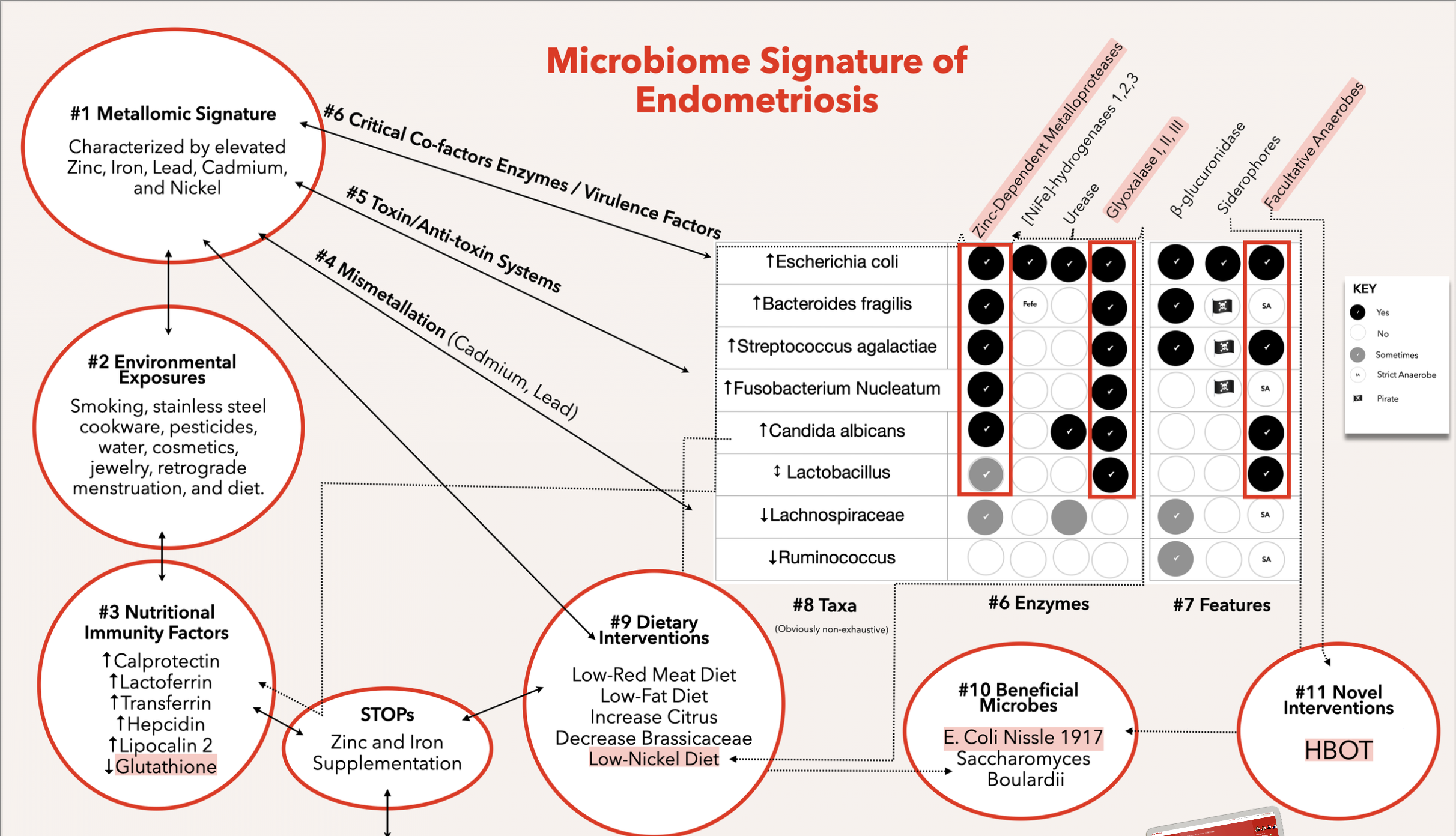
Heavy metals in the diet don't just affect human cells. They reshape the gut microbiome. This is the core insight of microbial metallomics and it's the piece that connects environmental contamination to metabolic disease.
When heavy metals enter the gut, they create selection pressure favoring metal-resistant bacteria, typically Gram-negative pathobionts with efflux pumps and metal-cofactored virulence systems. These bacteria thrive while metal-sensitive commensal species are suppressed. The result is a dysbiotic microbiome enriched for inflammatory, virulence-enabled organisms.
This dysbiosis has downstream metabolic consequences. Gram-negative pathobionts produce lipopolysaccharide (LPS), a potent endotoxin that triggers chronic low-grade inflammation when it translocates across a compromised gut barrier. Chronic low-grade inflammation is one of the most consistent metabolic features of obesity. It impairs insulin signaling, promotes adipogenesis, and disrupts appetite regulation.
The pathway from heavy metals to obesity: metal-contaminated food enters the gut, selects for inflammatory metal-resistant pathobionts, degrades barrier integrity, increases endotoxin translocation, drives chronic inflammation, and disrupts metabolic regulation.
This pathway does not require the individual to eat too much sugar. It does not require the individual to eat too many calories. It operates through the microbial ecosystem, which is shaped by the chemical composition of the food supply, not just its macronutrient content.
Why this explains what sugar doesn't
The sugar hypothesis fails to explain several features of the obesity epidemic that the metallomics hypothesis accounts for naturally.
It explains cross-species prevalence. Lab rats, pets, and feral animals all consume food derived from the same contaminated agricultural system. They are exposed to the same heavy metals through the same supply chain. The metallomics pathway operates identically regardless of species.
It explains the timing. Heavy metal accumulation in agricultural soils has been increasing since the 1960s. The obesity epidemic began accelerating in the 1980s, roughly one generation after widespread adoption of heavily contaminated phosphatic fertilizers. This lag is consistent with the time required for soil contamination to propagate through the food chain and for chronic low-grade metabolic disruption to manifest at population scale.
It explains the demographic pattern. Obesity disproportionately affects lower-income populations who consume more heavily processed food produced from commodity crops grown on the most intensively fertilized soils. This is typically attributed to caloric density and food desert dynamics. The metallomics hypothesis adds a complementary explanation: these populations are also consuming more heavy metals per calorie because the food they can afford comes from the most contaminated agricultural inputs.
It explains why dietary interventions have limited long-term success. If the metabolic disruption is driven by the chemical composition of the food (specifically the heavy metal load) rather than the macronutrient composition, then changing the ratio of carbs to fat to protein addresses a downstream variable while the upstream driver persists. The microbiome doesn't care whether you eat keto or vegan. It cares what metals are in the food.
What I'm not saying
I am not saying sugar is harmless. Excessive sugar consumption has well-documented metabolic consequences. I am not saying calories don't matter. I am not arguing against dietary interventions.
I am saying that sugar may have been scapegoated as the primary driver of a population-level metabolic disruption that is better explained by systemic agricultural contamination operating through microbial metallomics pathways. The sugar narrative is simpler, more intuitive, and more commercially useful (it sells low-sugar products). The metallomics narrative is more complex, less intuitive, and implicates agricultural practices that are far harder to change than a product label.
I published the full mechanistic framework with the complete evidence base. The argument stands or falls on the data.
What follows from this
If the metallomics hypothesis is correct, or even partially correct, the implications are substantial.
Dietary guidelines focused exclusively on macronutrients are targeting a downstream variable. The upstream variable is the chemical composition of the food supply, specifically the heavy metal load introduced through agricultural inputs.
Heavy metal testing of food products is not just a food safety measure. It is potentially a metabolic health measure. This is one of the reasons I built HMTc (Heavy Metal Tested and Certified) to cover eight metals across food categories. The testing infrastructure needs to exist before the scientific consensus catches up.
Research on the gut microbiome and obesity needs to incorporate metallomics. Most microbiome-obesity studies characterize which taxa are present. Very few ask why those particular taxa are enriched. The answer, in many cases, may be that heavy metals in the diet are selecting for them. Without measuring the metallome alongside the microbiome, these studies are describing the effect while ignoring the cause.
This is a twenty-year thesis. I don't expect it to be popular soon. But the data will accumulate, the cross-species evidence will become harder to dismiss, and the conversation will eventually shift from "eat less sugar" to "what's in the food that's reshaping the ecosystem we depend on?"
I've been calling trends for seventeen years. I'm always too early. I've never been wrong about direction.